
Trash Rack Cleaning Machines (TRCM)
Trash rack
cleaning machines
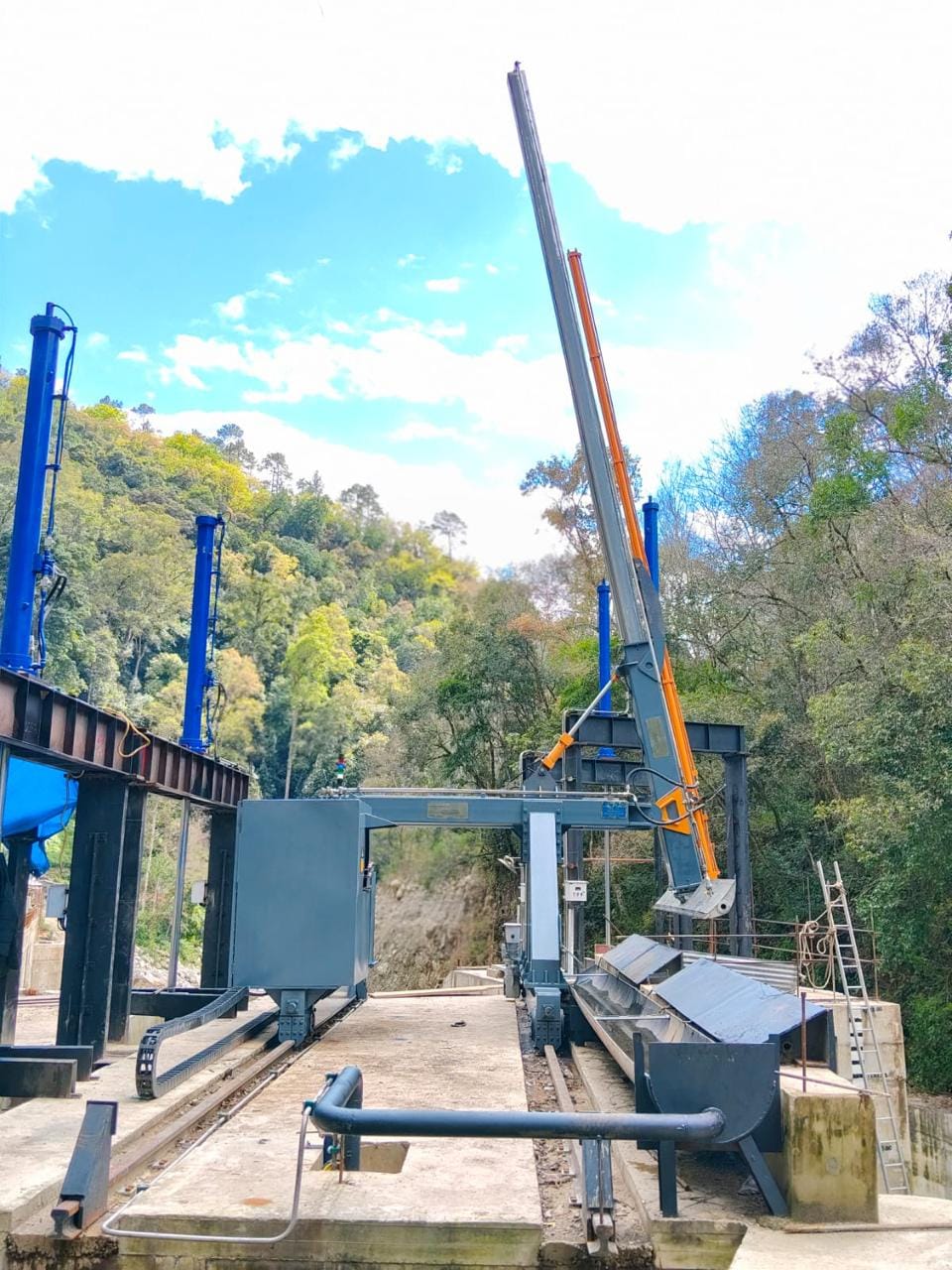
Automated debris removal that protects downstream infrastructure and holds peak water flow. Debris on the intake screen builds a differential head across the rack, starves turbines and pumps, and loads the bars until they bend. Hydraulic and wire-rope machines, plus log boom barriers — matched to the intake.
Overview
Keeping the intake bay clear
A trash rack cleaning machine keeps the debris load off the intake screen so the plant runs at design head. Logs, branches, leaves, aquatic weed and plastics collect on the bars, build a differential water level across the rack, and starve the turbines or pumps downstream — a head loss of a few centimetres is lost megawatts.
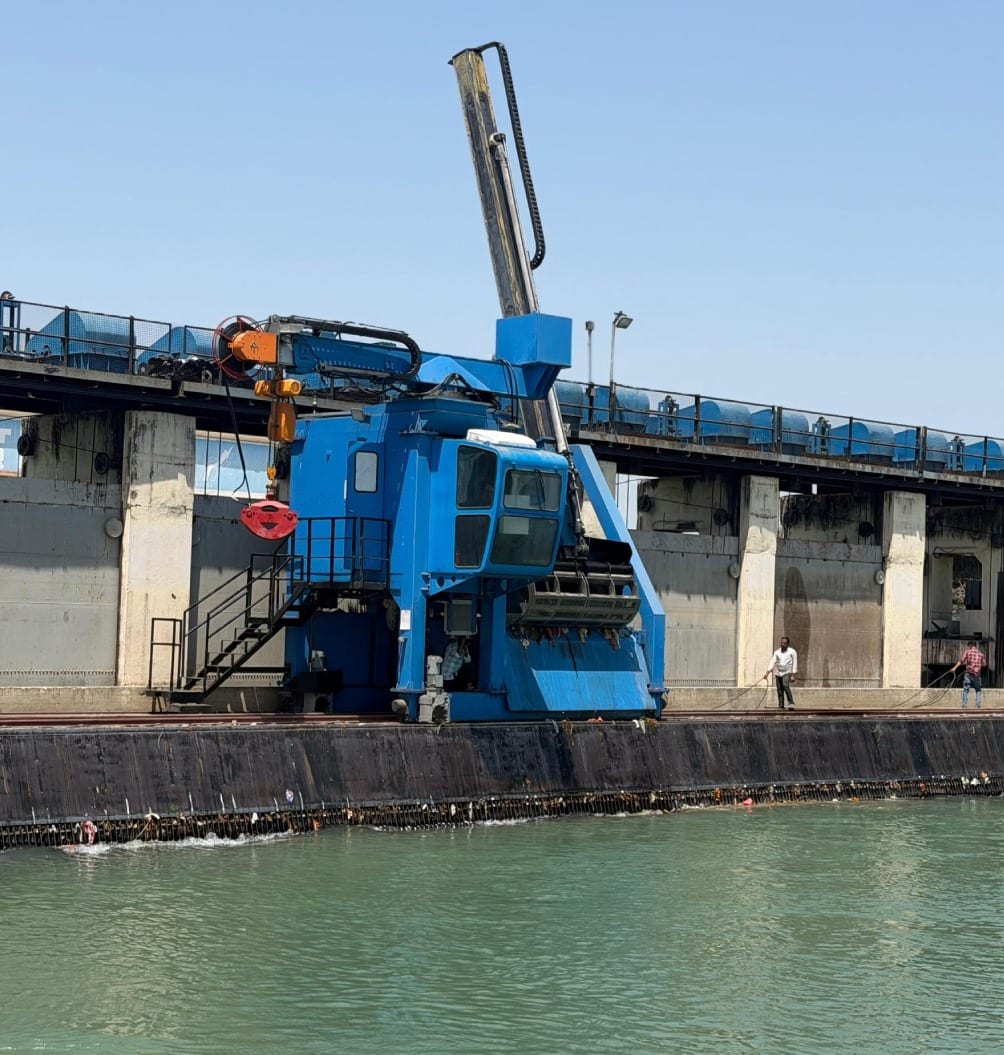
Basmni designs, manufactures, installs and commissions automated TRCMs — hydraulically operated and wire-rope operated types, with log boom barriers to hold floating trash — matched to the intake depth, channel width, debris profile and structure on each site, with PLC or SCADA control for manual, semi-automatic and fully automatic cleaning cycles.
How it works
Detect
Rake
Discharge
Detect the load
A differential water-level sensor watches the head across the rack, or the machine runs a timed cycle, so a cleaning pass starts before the blockage costs generation.
Rake the screen
The grab is driven down the face of the trash rack — by rigid hydraulic arms or a wire-rope hoist — and combs debris off the bars.
Discharge the debris
The raked material is lifted clear of the water and released into a hopper, conveyor or skip, then carried off site — no manual handling in the intake current.
Key features
Automated and matched to the intake
The mechanism is chosen for the depth, channel and debris — not one machine for every site.
Maintains operating head
Continuous or head-triggered cleaning holds the differential across the rack near zero, so the plant keeps its design flow and full generation or pumping yield year-round.
Protects downstream equipment
Clearing the load before it chokes penstocks and intake channels keeps logs, timber and boulders off runner blades, impellers and seals — and prevents cavitation and vibration.
Relieves structural load
A heavily clogged rack carries immense hydrostatic pressure that bends bars or collapses the screen. Regular raking keeps that differential pressure down.
Removes the manual hazard
Automating trash removal ends the safety risk of hand raking, crane-slinging and sending divers into turbulent intake currents.
Unmanned automated cycles
Semi-automatic and fully automatic machines run on level-differential sensors or timers, cutting the on-site crew to routine servicing.
Flood-season capacity
Debris inflow rises sharply through the monsoon. The machine handles the peak continuously, with no extra labour shifts, and log booms hold heavy timber and ice off the rack.
Configurations
Three ways to keep a rack clean
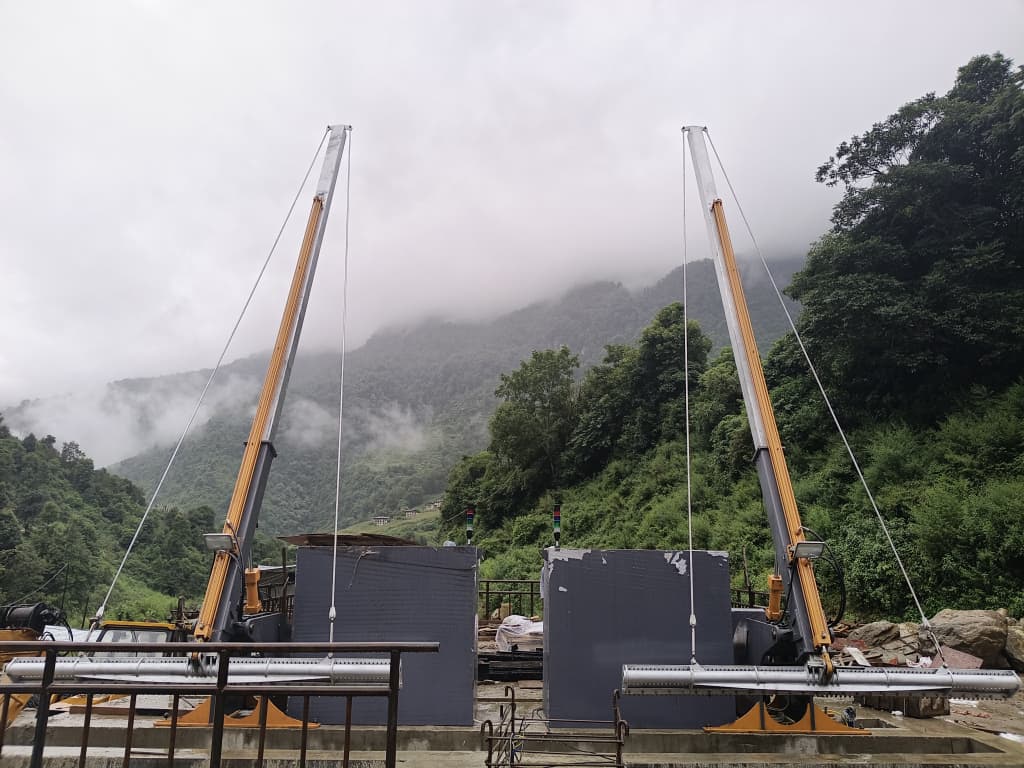
Hydraulic TRCM
For shallow-to-medium intake depths (up to about 15–20 m). Rigid single, double or telescopic hydraulic arms exert positive raking force into a deep, compacted debris layer that a gravity rake cannot penetrate.
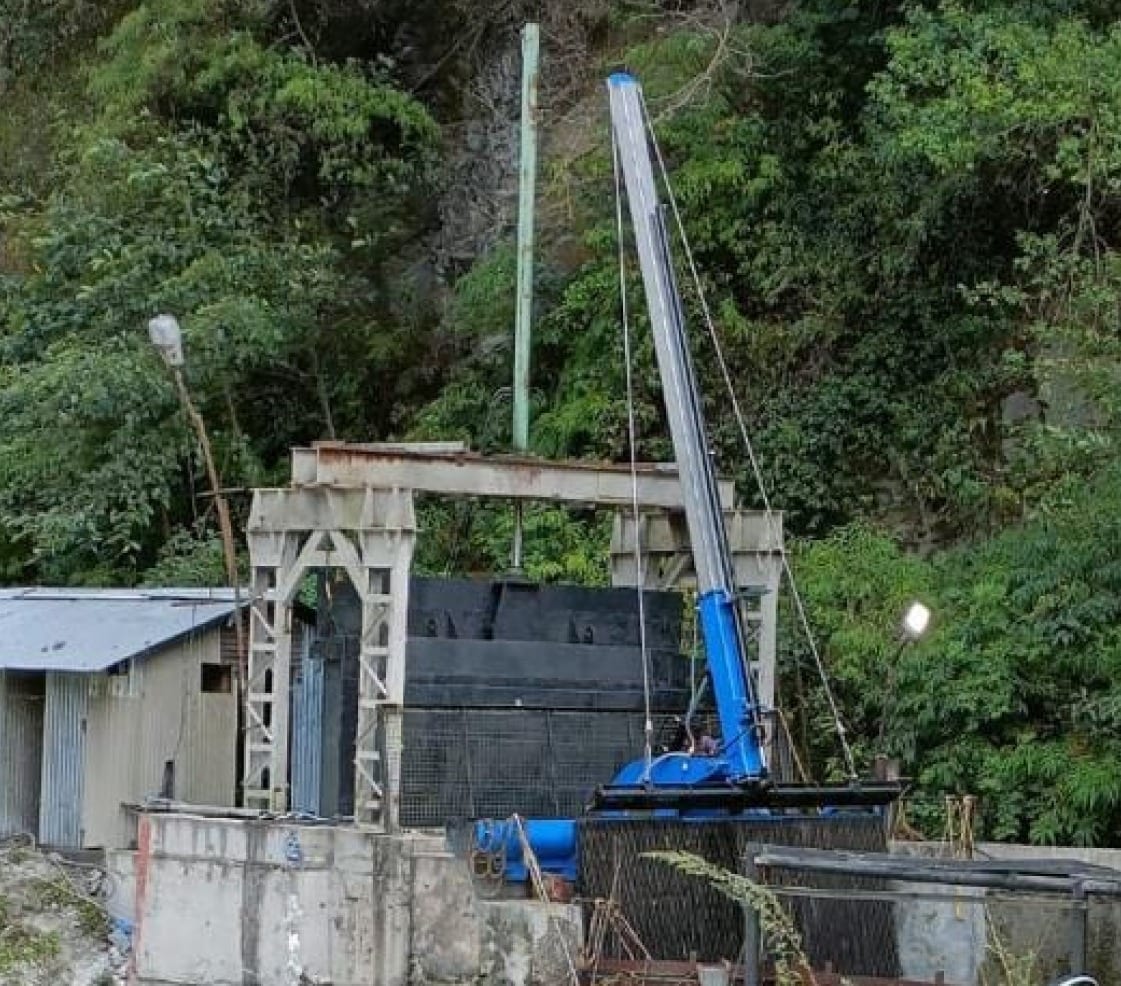
Rope / wire-cable operated TRCM
For deep intake channels beyond 20 m. Wire-rope hoists lower heavy grab buckets or multi-blade grapples under gravity — cost-effective and adaptable where a rigid arm cannot reach.
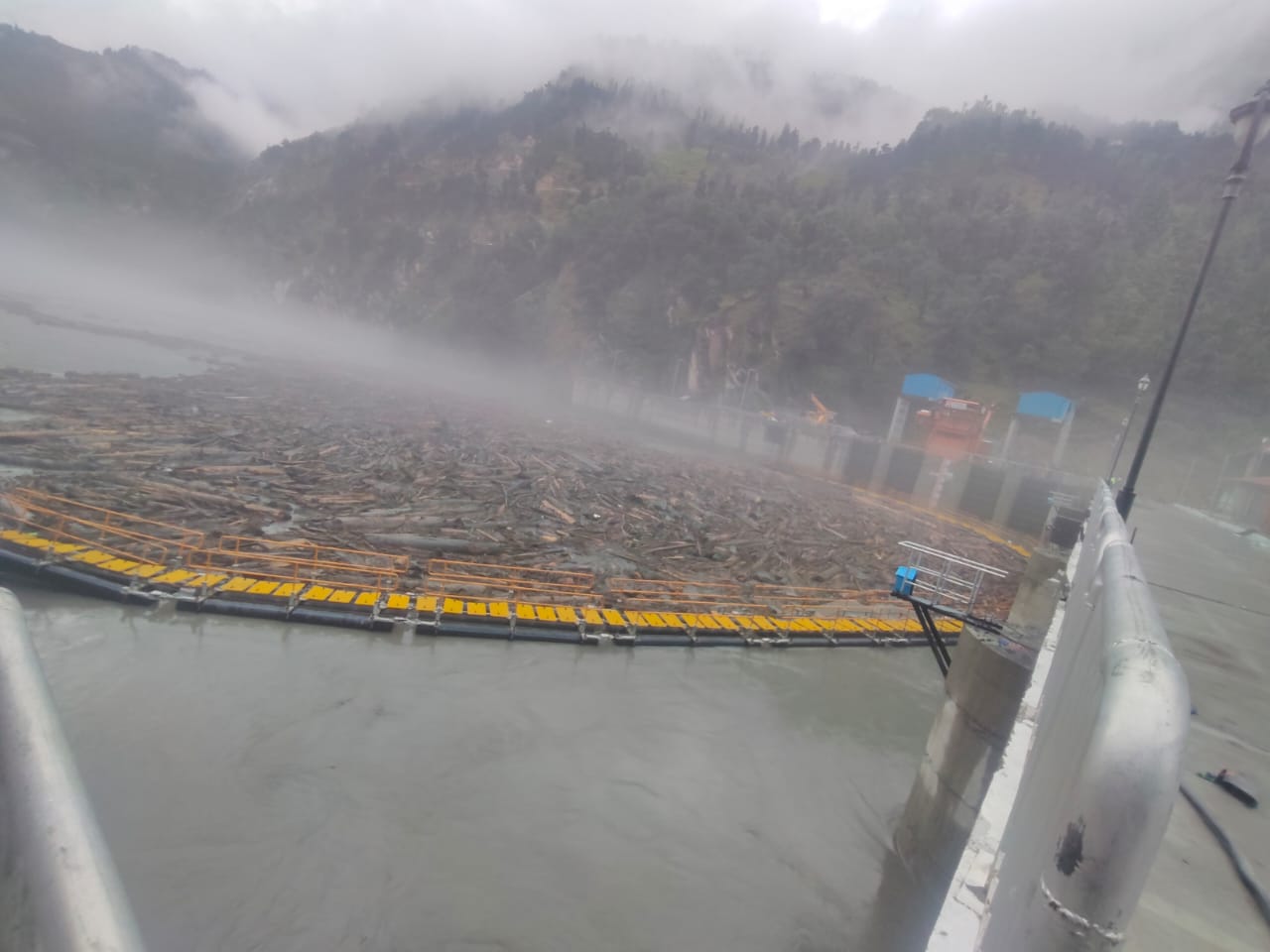
Log boom barriers
The third way is to hold the floating trash before it reaches the rack. Impact-resistant buoyancy modules on steel tension cables rise and fall with the water level, and the trash they hold is discharged through the flap gate of the reservoir.
Key components
What a cleaning machine is made of
Five sub-assemblies work together to rake the screen, move along the intake and carry the debris off site.
Grab / rake bucket
The primary clearing tool. Tines or blades interlock with the trash-rack bars and comb debris off the screen from the bottom up.
Hoisting & raking mechanism
Hydraulic cylinders or a wire-rope winch that lowers, opens, closes and lifts the grab along the face of the rack.
Travelling carriage / gantry
A rail-mounted frame that moves the machine laterally so one unit serves every bay across a wide intake.
Debris disposal system
Hoppers, conveyor belts or collection bins that carry the raked material clear of the water and out to a truck or skip.
Control system (PLC / SCADA)
Runs manual, semi-automatic or fully automatic cleaning cycles, typically triggered by a differential water-level sensor or a timer.
Hydraulic system
Power pack, valves and pressure-rated piping that deliver oil to the cylinders driving the arm, grab and carriage.
Direct ROI
Operating with and without a machine
The return shows up as recovered capacity, lower maintenance, safer work and flood-season uptime.
Plant capacity
Reduced by head loss across a blocked rack
Runs at design hydraulic efficiency
Maintenance cost
High — repeated turbine and pump repairs from debris strikes
Minimal — routine machine servicing
Labour risk
Manual raking, crane-slinging and diving in live intake currents
Unmanned, automated cleaning cycles
Flood readiness
Intake chokes as debris inflow spikes; risk of shutdown
Continuous real-time extraction through the flood peak
Engineering & delivery
Survey to commissioning
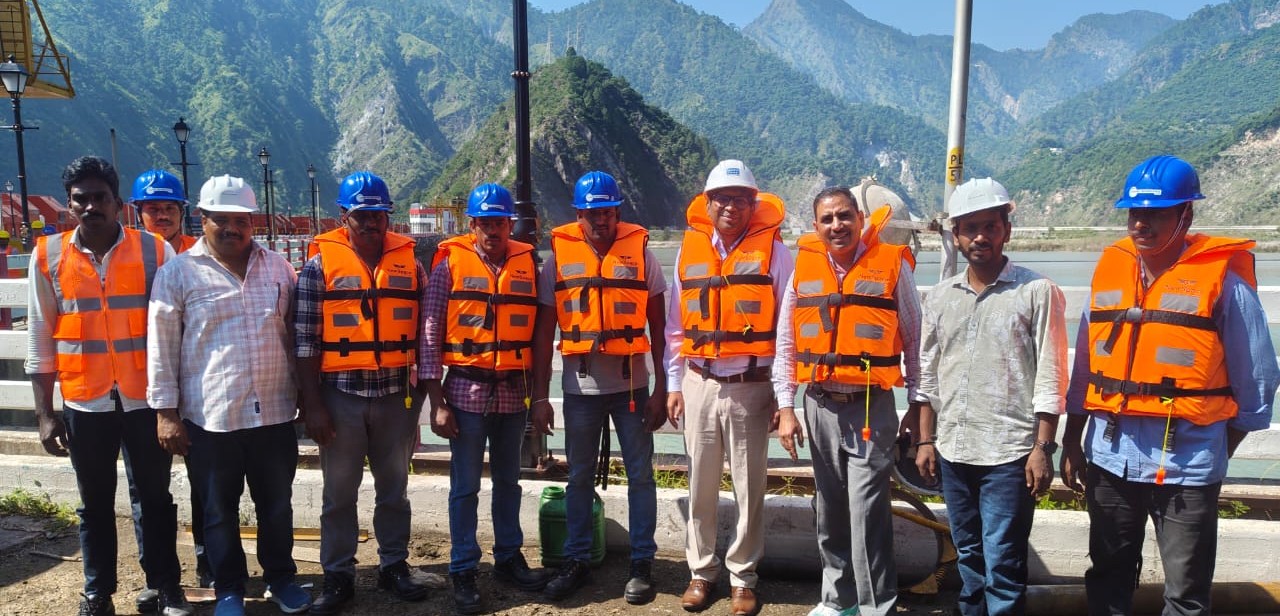
Basmni surveys the intake, engineers the machine to the rack and channel, builds it, then installs and commissions it on the structure as one accountable scope.
Survey
Design
Manufacture
Install
Commission
FAQ