Dam | Reservoir | Canal | River | Sea
Dredging
End-to-end dredging for dams and reservoirs under extreme conditions — depths upto 100 m, high solids concentrations, hydrostatic pressure and long discharge pipelines. Basmni engineers, mobilises and operates the dredge, pump and pipeline package.
Overview
Recovering storage lost to sediment
Reservoirs and dams lose live storage every year as sediment settles against the dam, chokes intakes and fills the dead-storage zone. Recovering that capacity means working at depths, solids concentrations and pipeline lengths where standard low-head dredgers choke and wear out fast.
Basmni delivers deep dam and reservoir dredging end to end — engineering, equipment, mobilisation and operation — using cable-deployed submersible pumps and sediment fluidisation to work reliably down to around 100 m.
International partnership
Backed by a world-leading dredge manufacturer
Basmni Technologies, established in 2016, delivers end-to-end deep dredging for dams and reservoirs. The dredge, pump and cutting technology is built on a technical partnership with Dragflow s.r.l. of Italy — a world-leading manufacturer of submersible dredge pumps and cable dredges.
- End-to-end scope — engineering, equipment, mobilisation and operation
- Technical partnership with Dragflow s.r.l. (Italy) for pumps and dredges
- Proven on dam-dredging projects in Italy, Eritrea and India
How it works
Fluidise
Pump
Convey
Fluidise the sediment
Jet ring systems and side cutters break up compacted silt, clay and consolidated banks ahead of the suction inlet, turning settled sediment back into a pumpable slurry.
Pump from depth
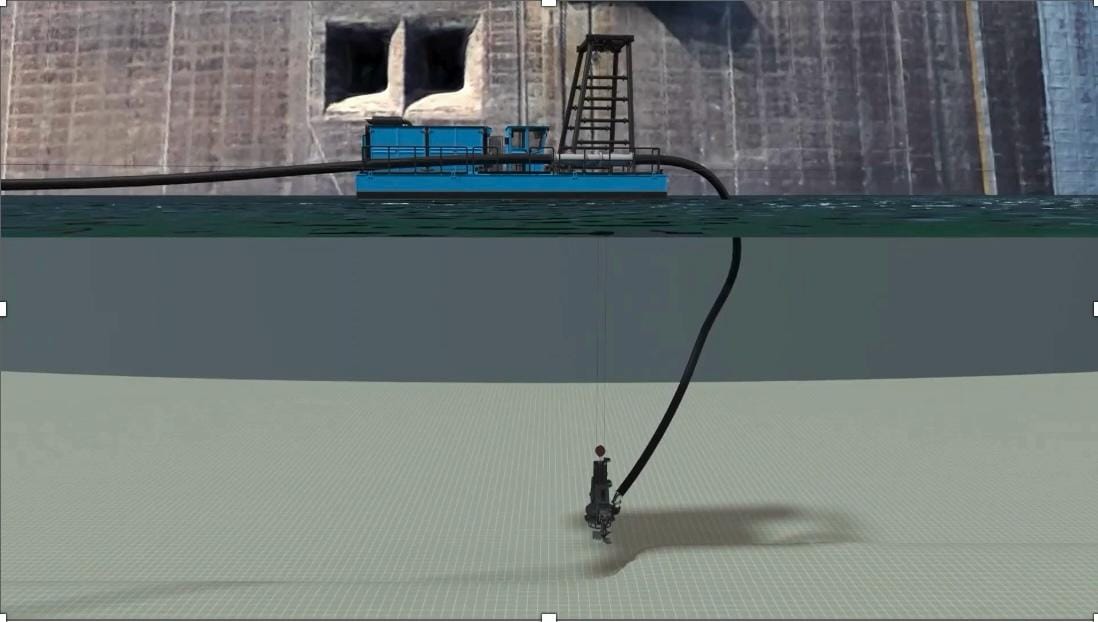
A slurry submersible pump sits at the sediment layer on a cable-deployed frame — removing suction-lift limits and cavitation — and lifts solids concentrations in the 35–60% range.
Convey to discharge
Multi-stage and booster pump configurations hold velocity above the critical deposition limit through long discharge pipelines to the disposal or dewatering area.
Key features
Built for extreme conditions
Depth, solids concentration, cutting tools and discharge distance — engineered to the reservoir.
Extreme working depth
Continuous sediment removal down to around 100 m for dead-storage zones, dam intakes and tail pools.
High solids concentration
Sediment fluidisation and open impellers sustain slurry in the 35–60% solids range without choking.
Compact footprint
Around 100 m depth is reached with a pontoon as small as 12 × 8 m — easy to mobilise on constrained reservoirs.
Matched cutting tools
Side cutters and jet rings are selected for the sediment on site, from soft silt to consolidated banks.
Long-distance discharge
High-head and booster pump configurations carry slurry over extended pipeline runs to disposal.
Hazard-aware operation
Remote-controlled platforms keep operators away from intake gates, trash racks and toxic sludge basins.
Dredging equipment
Equipment for extreme-depth dredging
Cable dredges
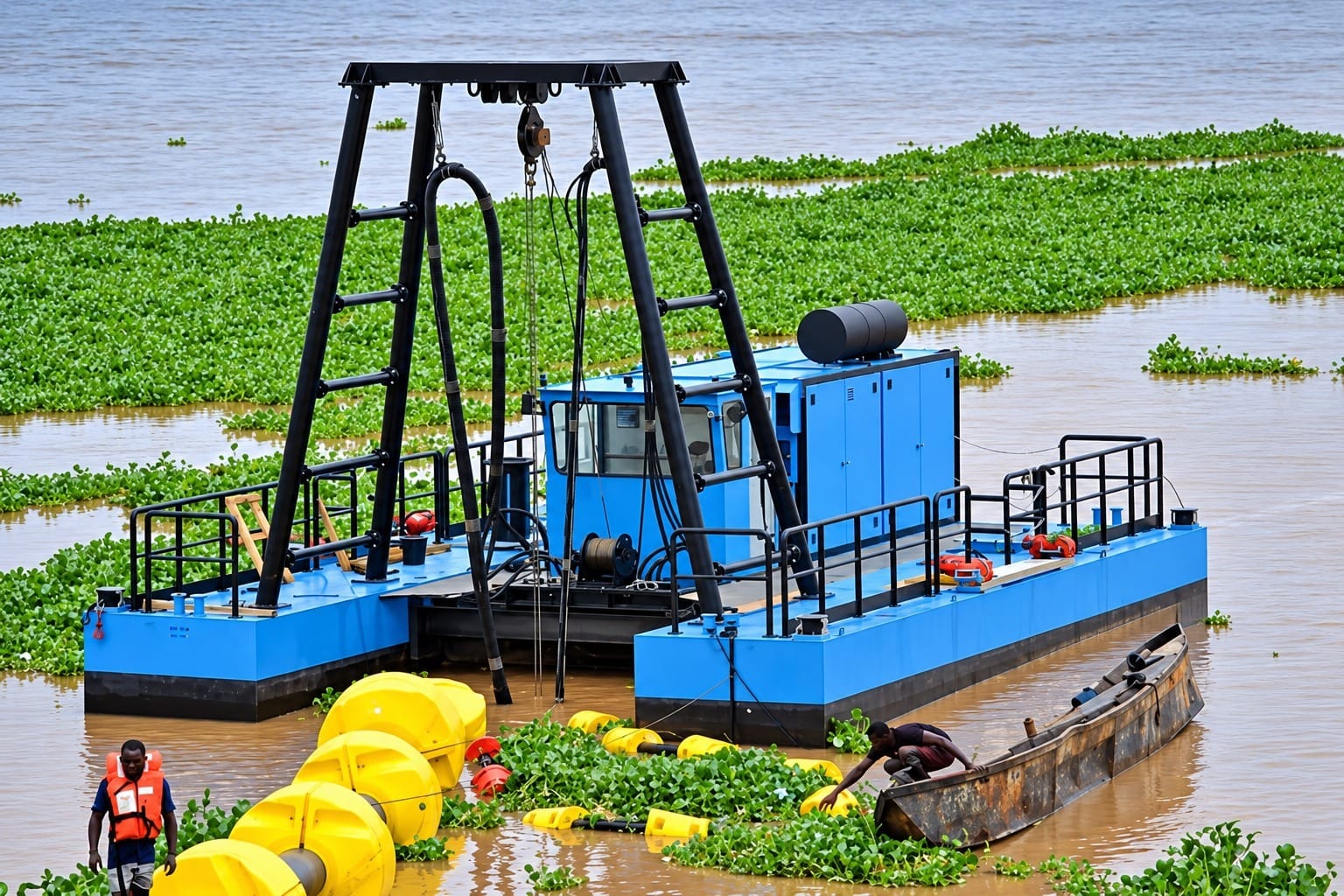
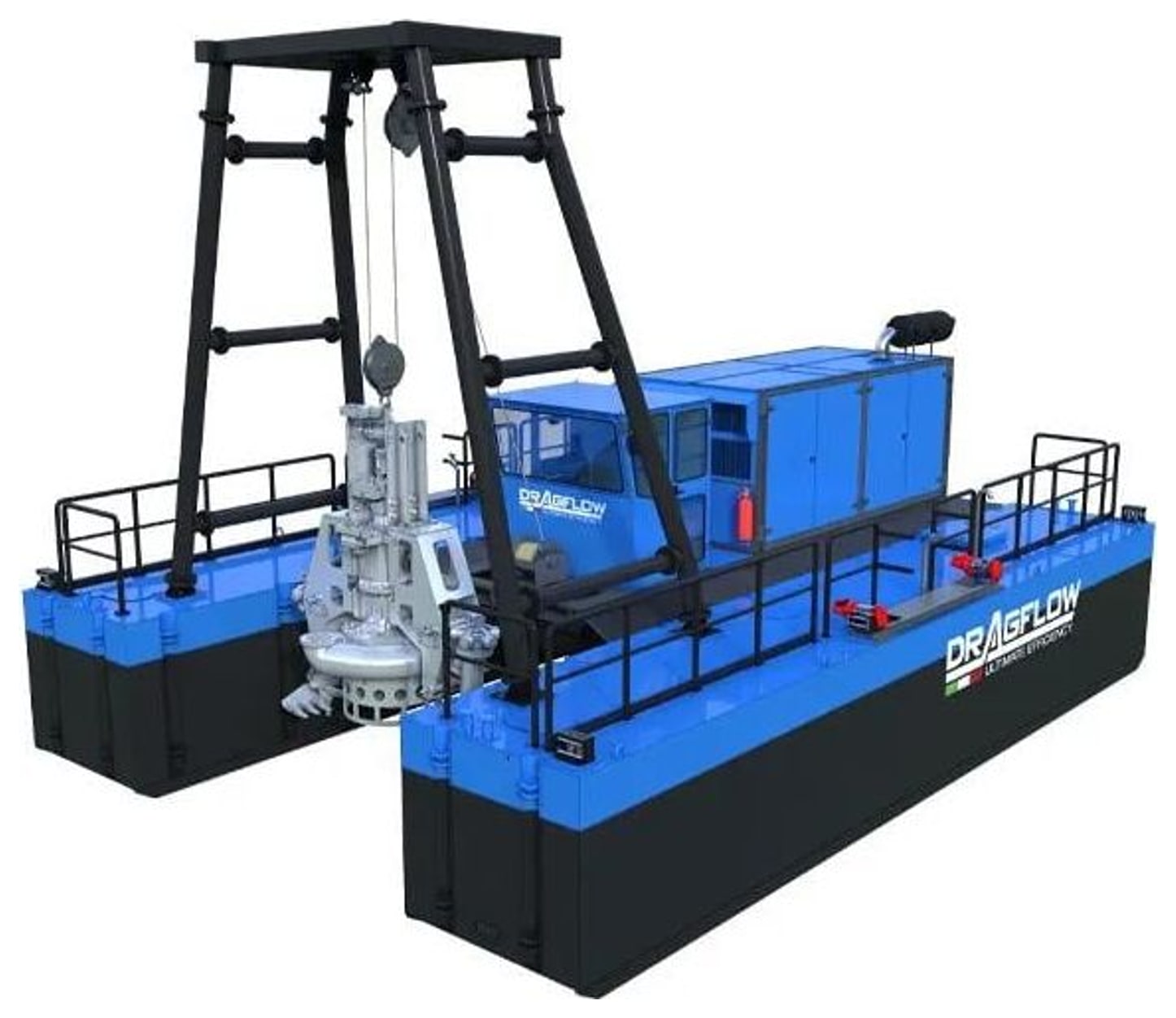
Suspended from a specialized crane, gantry or barge-mounted A-frame via heavy-duty umbilical cables and high-tensile steel wire ropes. Depth is managed with precision electric or hydraulic winches and depth-measuring pulleys, allowing controlled vertical descent directly into the working zone.
- Application
- Extreme depths, up to and beyond 100 m — deep canyons, dead-storage zones and dam intakes.
- Engineering benefit
- Not limited by ladder length; the pump descends vertically on cables to reach zones no conventional dredge can.
Remote-controlled dredge
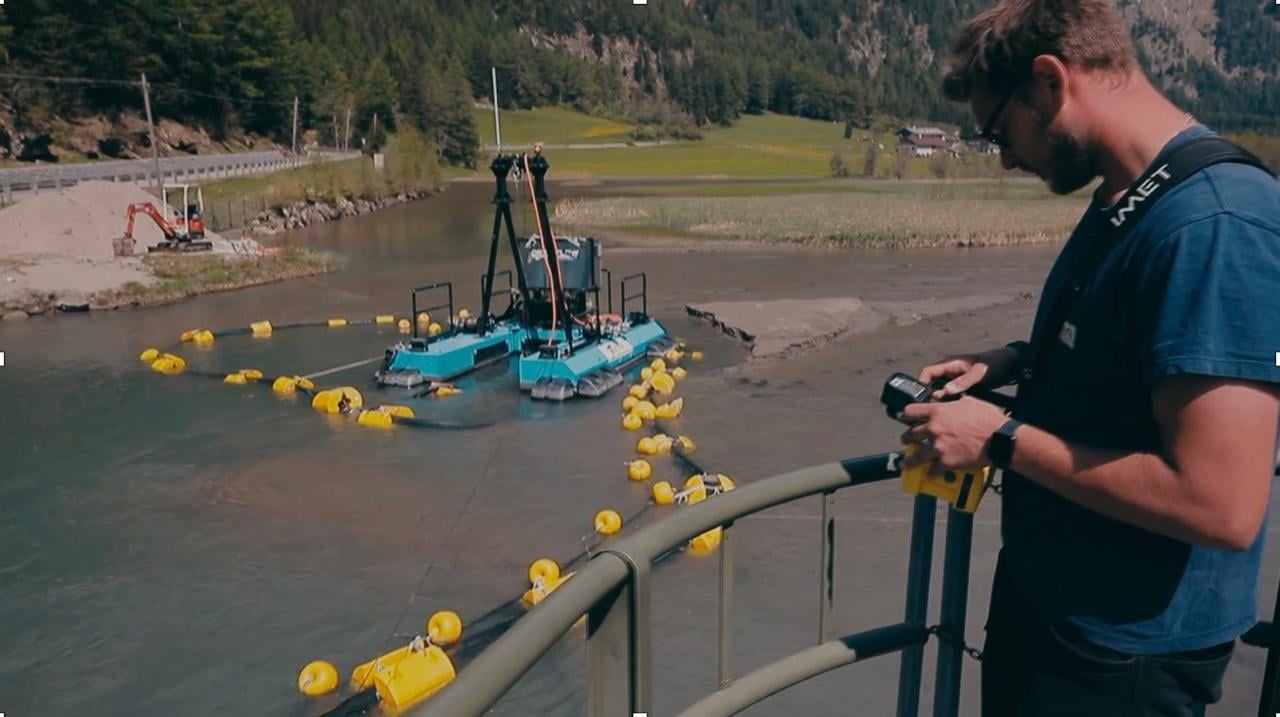
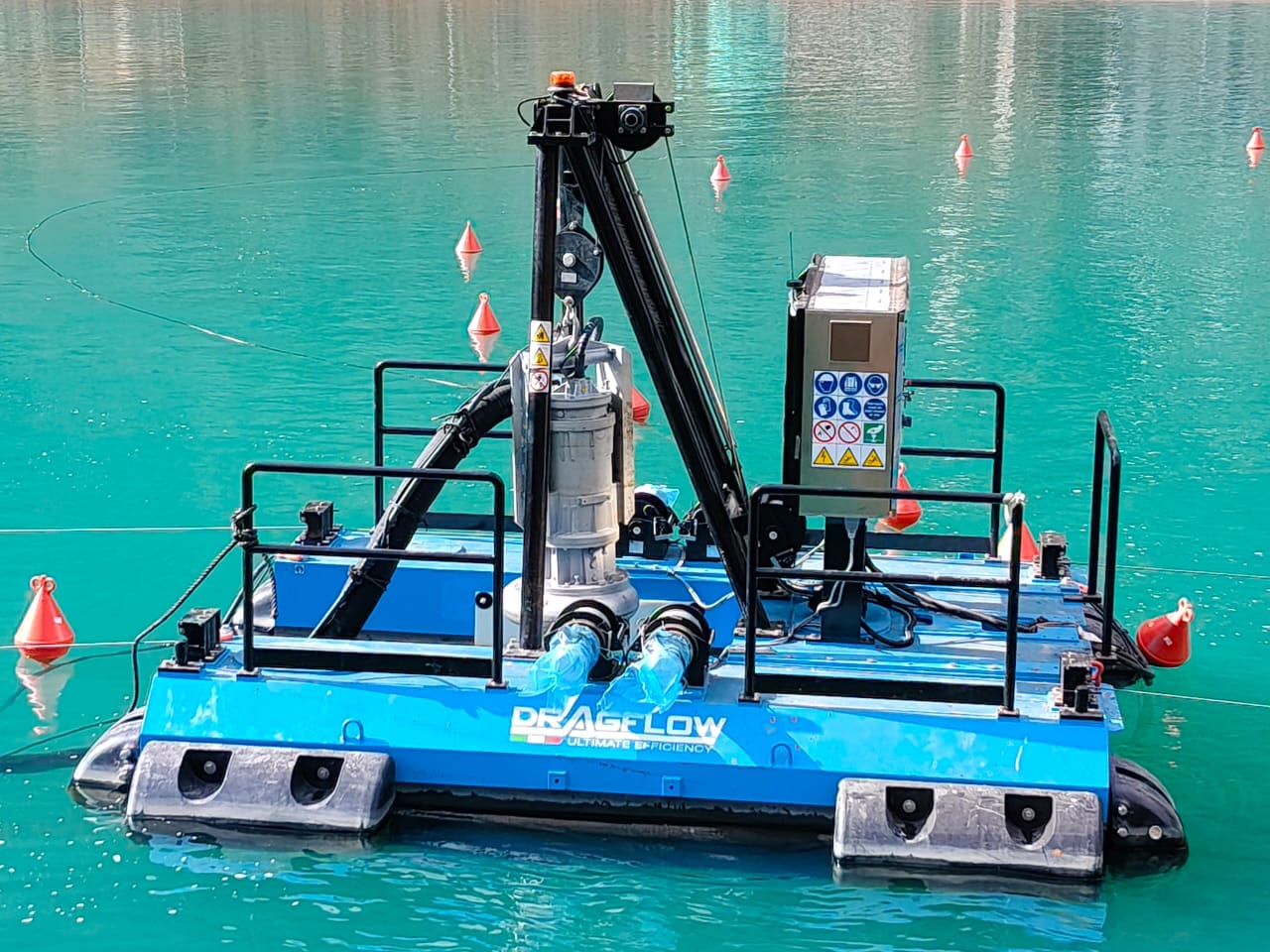
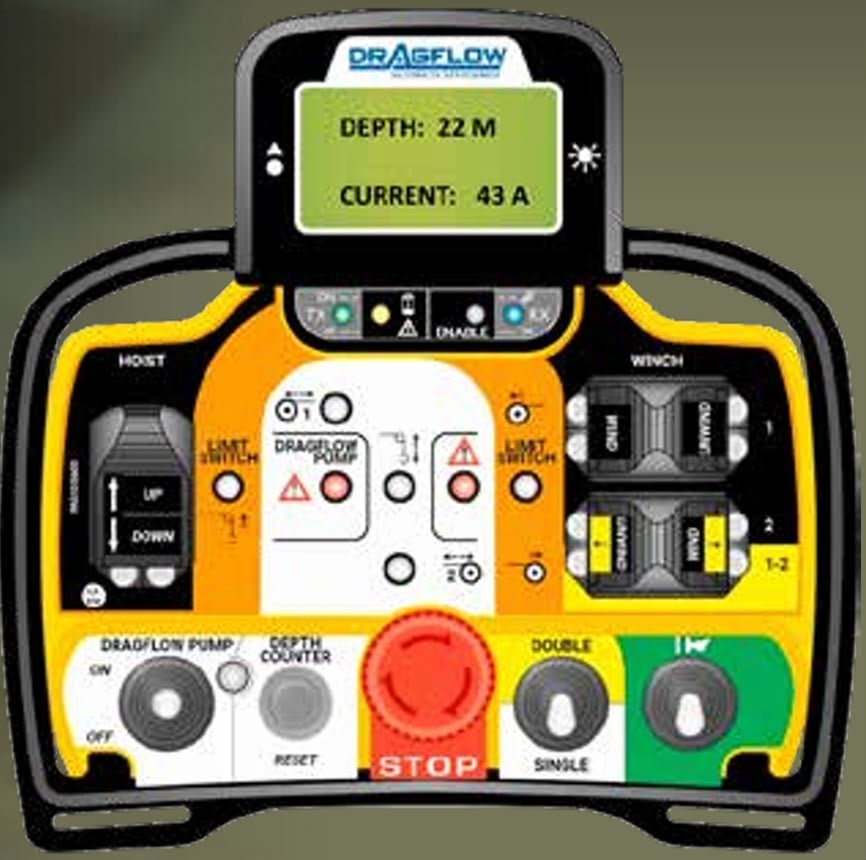
Modular, self-floating or pontoon-supported platforms maneuvered entirely by long-range remote telemetry, integrated with automated GPS positioning, sonar and echo sounders, and monitoring cameras.
- Application
- Hazardous environments and restricted zones near intake gates, trash racks and toxic or acidic sludge basins.
- Engineering benefit
- Keeps operators away from the hazard while retaining precise, monitored positioning.
Amphibious pumps
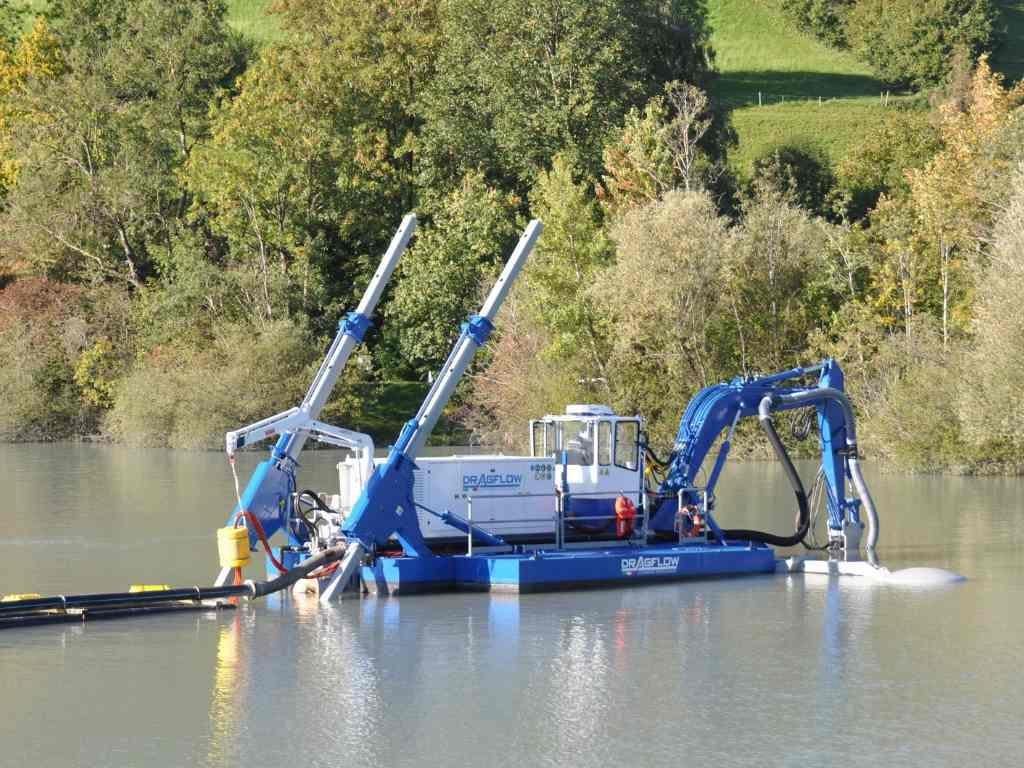
Equipped with track-mounted pontoons that allow self-propulsion on land and stable flotation in shallow water. It serves a complementary role for near-shore clearing rather than deep zones.
- Application
- Shallow tail-water zones, marshy reservoir peripheries and littoral areas with fluctuating water levels.
- Engineering benefit
- Self-propels on land and floats in shallow water, covering near-shore areas other dredges cannot access.
Slurry submersible pumps
Fitted with high-chrome or specialized alloy wear components and powered by heavy-duty electric motors with robust cooling jackets or high-pressure hydraulic drives. Open multi-vane or vortex-style impellers pass large solids without choking; high-head and booster configurations overcome long discharge lines.
- Application
- Integrated directly onto cable-deployment frames or remote dredges as the core workhorse.
- Engineering benefit
- Submerging the pump at the sediment layer removes suction-lift limits and controls cavitation.
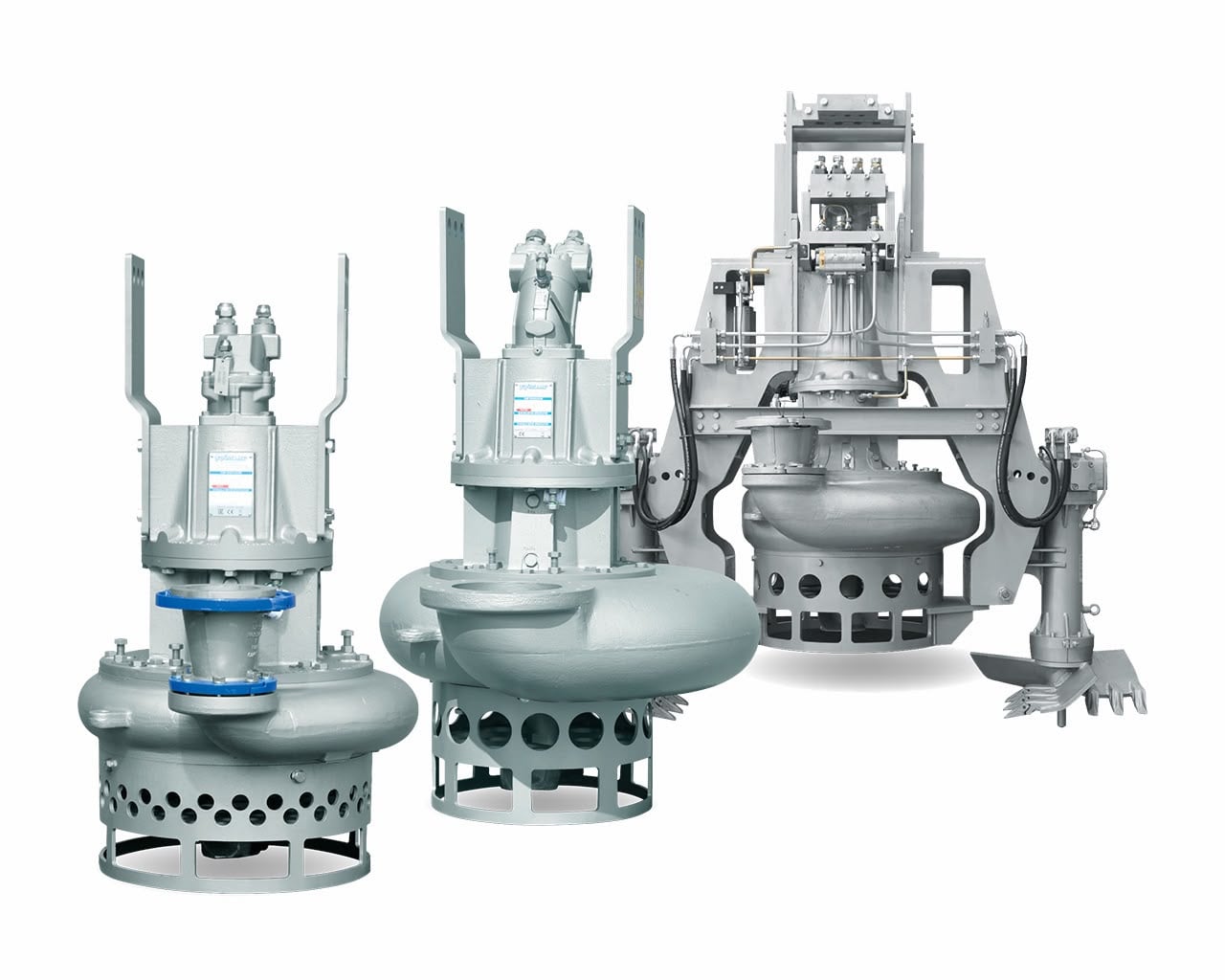
Dredging technology
The technical concept behind the depth
Agitator concept
High concentration solid handling capability in the 35–60% range.
Cable dredge equipment
Specialized dredging systems designed for deep dam dredging.
High-depth dredging
Continuous sediment removal technology for sustained operation.
Compact configuration
Around 100 m working depth with a dredge as small as 12 × 8 m.
Side cutters
Break up compacted and consolidated sediment ahead of the suction inlet.
Jet ring systems
High-pressure water jets fluidize silt and clay for varied sediment types.
Why Basmni's solution
High depth, small dredge, fast on site
High depth from small dimensions
- ✓Around 100 m working depth with a dredge as small as 12 × 8 m
- ✓A wide pump range, including high-head models, for long or elevated discharge
- ✓Side cutters and jet ring systems that work at any depth — from loose material to compact soil
- ✓Limited draught of about 1 m
- ✓One operator, low operating cost, delivery in two to four months
Easy transport and assembly
- ✓Modular construction — the dredge is built up with pin assembly, no submerged work
- ✓Site installation in as little as 6–8 hours
- ✓No modification needed to adapt across a wide range of dredging depths
- ✓Compact enough for sites with difficult access
Engineering & delivery
Survey to handover
Basmni scopes each campaign from a bathymetric and sediment survey, then engineers the dredge, pump and pipeline package to the reservoir before mobilising crews to operate it.
Survey
Engineering
Mobilisation
Dredging
Handover
FAQ